

Haryana works hard—and so does its weather. From the dry, blazing winds across Hisar and Sirsa to humid monsoon afternoons in Yamunanagar and Ambala, plus the constant bustle in Manesar, Bawal, and Kundli industrial belts, cooling is a daily requirement, not an optional extra. Rocksun Air Coolers are designed for exactly these conditions: high airflow that people feel right away, lower electricity usage for long duty cycles, and simple, service-friendly construction that fits homes, shops, offices, gyms, banquet lawns, workshops, and warehouses across the state.
Market streets in Rohtak, Sonipat, Panipat, and Palwal keep doors open. Traditional AC fights every entry; evaporative coolers work with airflow and still deliver comfort.
July–September brings humidity—but most spaces aren’t sealed. A small exit path (window/vent/door) lets humid air out and keeps the air feeling light, not sticky.
State highways, construction, and industrial corridors add dust to daily life. Rocksun designs emphasize easy cleaning and quick pad service so performance stays consistent.
Haryana’s pre-monsoon months are hot and predominantly dry—perfect for evaporative cooling, which quickly drops perceived temperature with a fresh-feeling breeze.
Running sealed AC in large or leaky spaces is expensive. Coolers typically use far less electricity, so you can run them longer without flinching at bills.
Takeaway: If your doors open often—or your space is large and semi-open—air coolers suit most of the year in Haryana.
In open/high-traffic spaces compared to sealed AC.
Instead of recirculated stuffiness.
for festivals, events, and seasonal layouts.
swing louvers and, on select units, ductable outlets to reach corners and queues.
Wipe, rinse, refill, and back to work.
Feature choices: large tank vs direct water feed; swing louvers; duct-ready outlets for hot spots; night mode for homes.
Fans draw warm air through water-saturated cooling pads. As water evaporates, it absorbs heat from the air, producing a cool, refreshed breeze. Performance is best with cross-ventilation: keep a small exit path opposite the cooler so humid air leaves while fresh air enters. This is why coolers excel in MP’s open-front shops, event setups, and shutter-happy shopfloors.
Pro pairing: A Rocksun cooler on one side and an 18″ exhaust fan on the other create a gentle push–pull that clears heat and humidity fast—great for kitchens, workshops, and loading bays.
Gurugram (Gurgaon), Faridabad, Panipat, Karnal, Ambala, Panchkula, Yamunanagar, Kurukshetra, Sonipat, Rohtak, Hisar, Sirsa, Bhiwani, Rewari, Mahendragarh (Narnaul), Palwal, Jhajjar, Jind, Kaithal, Fatehabad, Charkhi Dadri—plus Manesar, Bawal, Dharuhera, Bahadurgarh, Rai, Kundli, and other industrial/logistics clusters along NH-44, NH-48, KMP, and Western Peripheral corridors.
Whether your site is a front-of-house showroom on a main road, a warehouse behind it, or a banquet lawn for evenings, Rocksun sizes and places units so each zone gets the airflow it needs.
Bedrooms in Panchkula and Ambala, living rooms in Karnal and Kurukshetra, balconies in Gurugram and Faridabad—quiet domestic models with night modes and large tanks keep families comfortable without heavy power draw.
From Ambala Cantt eateries to Sonipat dhabas on NH-44, doors never stay closed. Position a cooler upwind of the kitchen and leave a small exit gap; diners enjoy a fresher atmosphere during rush hours.
Sector gyms in Faridabad, coaching hubs in Panipat and Hisar—pre-cool on medium, hold on low during sessions. Aim louvers above head height so airflow covers the room evenly.
Weddings and melas in Karnal, Kurukshetra, and Yamunanagar need quick setup and quiet comfort. Perimeter placement with louvers set above head level keeps the vibe lively and the photos friendly.
Textile clusters in Panipat, engineering units in Faridabad, automotive ancillaries in Manesar–Bawal–Dharuhera, plywood and paper around Yamunanagar: target hot stations, packing lines, and dock doors. High-delivery units with direct water feed handle long shifts.
Kundli, Rai, Palwal, and KMP corridors thrive on open shutters and constant movement. Roll-in coolers reduce heat pockets at pick/pack lanes and mezzanines without sealing the entire volume.
Top up clean water; quick wipe; check pump and swing function.
Descale in borewell/mineral-heavy areas; inspect hoses, floats, and pump inlets.
Rinse tank and pads; brush intake grills—especially on highway-facing properties.
Deep clean, replace compressed or clogged pads, check casters and cables before summer peaks
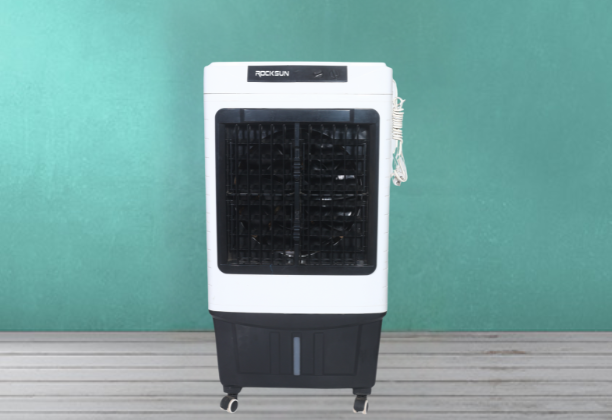
Yes—cross-ventilation is the trick. Keep a small exit path so humidity leaves while fresh air enters. Tents and large halls should leave flaps or vents slightly open.
In semi-open or high-traffic spaces, typically yes. Coolers use a fraction of the power required to air-condition a leaky volume.
Not mandatory. Large tanks handle most shifts. For multi-shift operations or large events, direct feed keeps output steady with minimal refills.
With clean water and weekly rinsing, typically a season or more. Replace when pads are compressed, clogged, or retain odor after cleaning.
Yes—check amperage and avoid starting multiple large units simultaneously. Staggered starts keep systems stable.
Extras: Electric cooler motors (PSC/BLDC), inline filters for hard water, and 18″ exhaust fans for cross-ventilation.
Warm air passes through water-saturated cooling pads. As water evaporates, it absorbs heat, sending a cool, refreshed stream into your space. Performance improves with cross-ventilation: keep a small opening opposite the cooler so humid air exits while fresh air enters. That’s why coolers shine on Haryana’s shopfronts, event lawns, and shutter-happy shopfloors.
Pro pairing: A Rocksun cooler on one side and an 18″ exhaust fan on the other create a gentle push–pull that clears heat and humidity faster.