
Rocksun Air Coolers in Delhi-NCR

Built for Big Cities, Busier Days, and Wide-Open Doors

Delhi-NCR doesn’t do “mild.” Summers arrive with dry, baking winds; monsoon brings humid afternoons and evening power-walks through door traffic; winter afternoons still heat up sun-facing rooms. In a region where shops, offices, gyms, schools, banquet venues, and factories keep doors constantly opening, Rocksun Air Coolers deliver the kind of airflow people actually feel—without turning your electricity bill into a thriller. This page is for Delhi-NCR specifically: Delhi, Gurugram (Gurgaon), Noida, Greater Noida, Ghaziabad, and Faridabad—plus the busy industrial/commercial pockets that stitch them together

Why Air Coolers Make Sense in Delhi-NCR (Not Just in May & June)

Open-door reality

From Connaught Place to Sector-18 Noida, doors are never closed for long. Traditional AC fights every entry/exit; evaporative coolers work with airflow instead of against it.

Humid months still workable

In July–September, keep a small exit path (window/vent/door). Cross-flow lets humid air leave and fresh air enter, keeping the space feeling light instead of sticky.

Humid months still workable

In July–September, keep a small exit path (window/vent/door). Cross-flow lets humid air leave and fresh air enter, keeping the space feeling light instead of sticky.

Dry heat advantage

Pre-monsoon months are hot and dry—perfect for evaporative cooling that drops perceived temperature fast with a fresh, moving breeze.

Cost control with comfort

For showrooms, gyms, cafés, banquet setups, and factory aisles, coolers use far less power than trying to “seal” enormous or leaky spaces for AC.

Why Choose Rocksun for Delhi-NCR

Designed for Busy, Semi-Open Spaces

A Model for Every NCR Need

Delhi-NCR Placement Tips (Specific and Useful)

  • Entrances & shopfronts: Place a unit near the intake side (door/vent) and sweep air across the customer path toward an exit point at the back.
  • Showrooms with glass façades: Afternoon sun in CP, MG Road, Sector-18? Use blinds during peak sun; aim louvers slightly upward so cool air “falls” evenly.
  • Food & beverage: In cafés and food courts, position upwind of kitchen/steam; maintain a small exit gap to avoid damp pockets.
  • Gyms & class studios: Pre-cool on medium; maintain on low during sessions. For group classes, aim above head height to avoid direct blasts.
  • Warehouses & docks: Stagger units along pick paths; keep a door or louver open opposite to drain heat and humidity fast.
  • Banquet tents & lawns: Perimeter placement, louvers just above head level, exits slightly open—keeps hairdos intact and photos happy.

Benefits You’ll Notice (Day One)

01

Comfort where people actually are

Aim louvers across queues, seating, benches, and stations.

02

Lower operating cost

Especially in spaces with constant door traffic, where AC efficiency collapses.

03

Fast, fuss-free setup

Roll in, fill water, plug in, and you’re live

04

Scalable coverage

Add units for seasonal peaks or big events; reposition in minutes.

05

Fresh-feeling air

Renewed indoor air avoids the stuffy feel common in sealed cooling.

Sizing & Selection (Easy Math, Better Results)

1. Find room volume: length × width × height.

2. Choose air changes per hour (ACH):

  • Bedrooms/home offices: 12–18 ACH
  • Living rooms, cafés, retail floors: 15–20 ACH
  • Gyms, banquets, tents, hot work zones: 20–25 ACH


3. Airflow (CFM): (Volume × ACH) ÷ 60.

  • Example: Showroom 40′ × 25′ × 12′ = 12,000 ft³. At 20 ACH → 4,000 CFM total. Two properly placed units can outperform one oversized unit blasting from a corner.


4. Pick features: large tank vs direct water feed; swing louvers; duct-ready outlets for targeting hot spots.


Area Coverage — Delhi-NCR, Not “Somewhere Near”

Delhi: Central & Lutyens’ Delhi, South (Saket, Vasant Kunj, GK, Hauz Khas), West (Janakpuri, Rajouri, Punjabi Bagh), East (Preet Vihar, Mayur Vihar), North (Model Town, Civil Lines), plus industrial areas—Okhla, Naraina, Mayapuri, Bawana, Narela

Gurugram (Gurgaon): Cyber City, Udyog Vihar, DLF Phases I–V, Golf Course Road, MG Road, Sohna Road, Manesar industrial corridors.

Noida: Sectors 16–18, 50–78, 90+, 62–65, Film City, NSEZ, Phase II industrial belts

Greater Noida: Knowledge Park I–V, Pari Chowk corridors, Expo/Auto hubs, Surajpur industrial areas.

Ghaziabad: Vaishali, Indirapuram, Vasundhara, Kaushambi, Sahibabad Industrial Area, RDC Raj Nagar.

Faridabad: Sectors 7–46, Neelam-Bata, Mathura Road corridors, Industrial Model Township clusters.

If your site sits on the borders (e.g., NH-48 spines, expressway logistics parks), we size and place units to suit mixed footprints—retail at the front, warehousing at the back, events on weekends. One plan, different zones, less drama.

How Rocksun Air Coolers Work (Plain & Practical)

Fans pull warm air through water-soaked cooling pads. As water evaporates, it absorbs heat, producing a cool, refreshed breeze. Performance is best with cross-ventilation—keep a small exit path on the far side (window, vent, door, tent flap). That’s why coolers thrive in NCR’s open-front retail, event setups, and shutter-happy shopfloors.

Pro move: Pair a cooler with an 18-inch exhaust fan on the opposite side to create a gentle, continuous draft that clears humidity and heat.
NCR at Street Level: Local Use Cases You’ll Recognize

Delhi (Central, South, West, East, North)

Noida & Greater Noida

Gurugram (Gurgaon)

Ghaziabad

Faridabad

Delhi-NCR Placement Tips (Specific and Useful)c

Maintenance That Fits NCR Life

Frequently Asked Questions (Rajasthan Edition)

Q1. Do coolers work during the monsoon?
Yes—keep an exit path. A slightly open window, louver, or door lets humidity out and keeps the breeze feeling fresh. In tents, leave flaps open at the far end.
In semi-open or high-traffic spaces, yes. Coolers typically consume far less electricity than trying to condition a leaky volume with AC.
  • Plastic: Rust-proof, lighter, great for homes and spaces with frequent moves or balcony placement.

  • Metal: Rigid and serviceable for long daily duty in shops, banquet halls, and shopfloors.
Not mandatory. Large tanks handle business hours. For long events or multi-shift operations, a direct feed saves refills and keeps output steady.

 With clean water and periodic rinsing, typically a season or more. In dusty corridors (ring roads, industrial belts), quick weekly rinses extend life.

Yes—confirm amperage and avoid starting multiple large units simultaneously. We can suggest staggered start practices for smooth operation.

Product Families You Can Use Across the Region

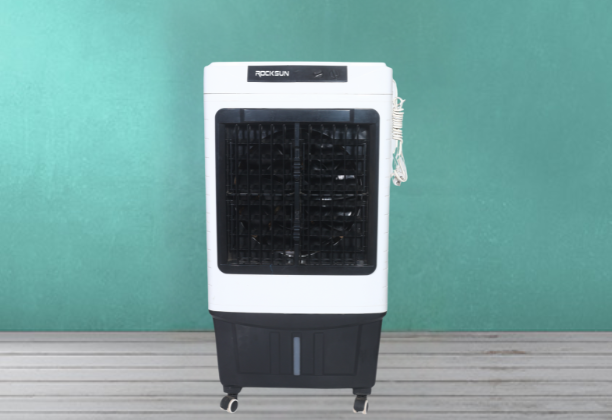
  • Domestic Plastic: Bedroom-quiet, rust-proof bodies, large tanks, caster wheels—perfect for flats and independent floors.
  • Domestic Metal: Rigid chassis for longer daily runtime and easy service access.
  • Commercial: Clean design for customer-facing floors; duct-ready select models push air to entrances, queues, and mezzanines.
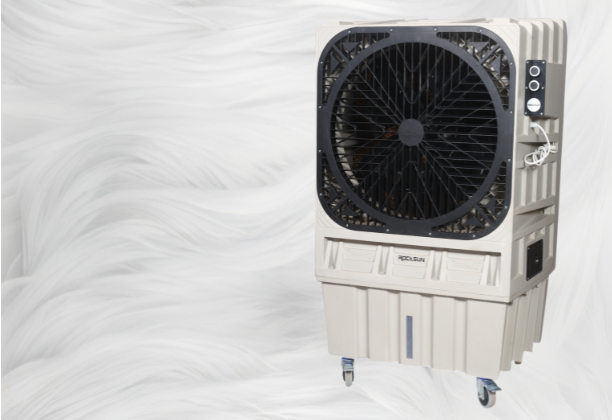
  • Industrial & Tent: High-volume airflow for banquets, exhibitions, factories, and warehouses—built for frequent moves and long shifts.
  • Accessories: Electric cooler motors (PSC/BLDC), inline water filters, and 18″ exhaust fans for cross-ventilation.